
Agriculture & soil
ZC-SY1
Automatic sticky-trap pest monitoring system
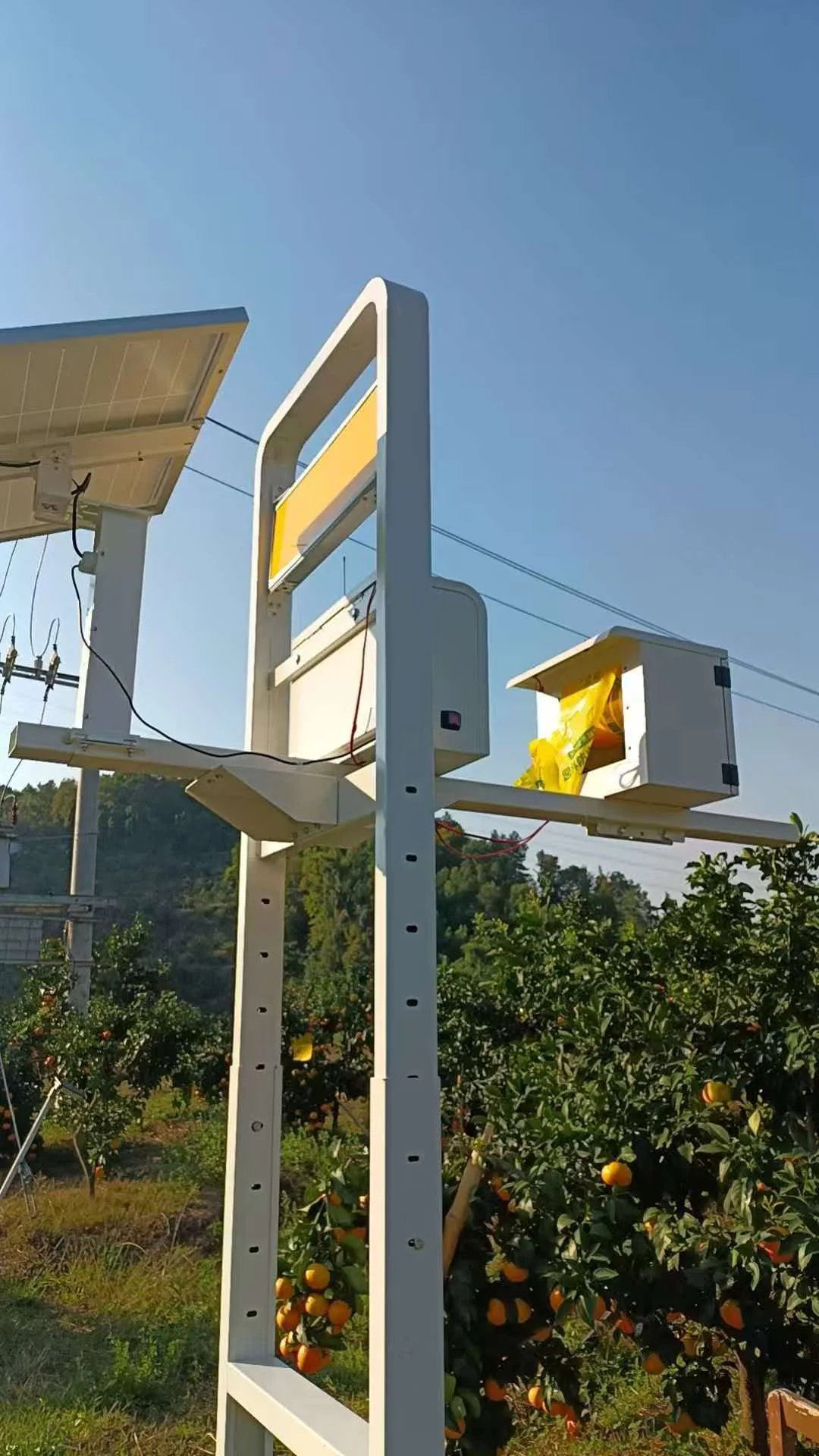
A field-installed sticky-trap camera that advances a colored attractant band automatically, captures images on a programmable schedule and uploads them to an agricultural IoT platform.
View online technical overview ↓Technical overview
Choose the configuration for your project.
| Model | ZC-SY1 |
|---|---|
| Monitoring method | Automatic color-attractant sticky band; the band advances on a programmable replacement interval. |
| Attractant band | Yellow, blue or green, selected for the target pest and crop. |
| Imaging | ≥12 MP industrial camera; scheduled and manual remote capture. |
| Upload and platform | 4G standard configuration uploads images to an agricultural IoT platform. The regional module and bands are confirmed for the project. |
| Power | AC 220 V or DC 12 V solar configuration. The supplied document lists a 60 W / 20 Ah solar system; sizing follows capture frequency and climate. |
| Consumption | Standby ≤6 W; operating ≤20 W. |
| Operating conditions | −20 to +70 °C and 0–95% RH as stated in the supplied technical parameters; confirm each fitted component's range for the project. |
| Optional equipment | 15 W insect-attracting light box and weather measurements. |
| Local buffer | Images are cached locally and uploaded after network recovery; cache capacity and retention are confirmed per project. |
| Platform functions | Manual species and count annotation, AI-assisted pest recognition, threshold alerts, and APP/WEB remote control and log updates. Recognition scope, English app availability, overseas alert delivery and deployment are confirmed per project. |
Ranges and interfaces refer to the described instrument configuration. Confirm selected sensors, power, mounting and supplied accessories in the quotation.
What is supplied. What is selected.
A clear scope before the pilot.
| Status | Item | Detail |
|---|---|---|
| Documented configuration | Sticky-trap camera | Automatic color-band rolling, ≥12 MP industrial camera, 4G upload, AC 220 V or DC 12 V solar supply, and local cache. |
| Select before ordering | Band, light and sensors | Yellow, blue or green band; optional 15 W light box and weather measurements. The 60 W / 20 Ah solar example is sized for capture frequency and climate. |
| Project scope | Camera variant, server and AI | A special lightweight camera, a North American cold-weather build, and direct upload to a customer server or AI model are separate development scopes requiring adaptation, testing and a separate quotation. |
Installation & maintenance planning
- Keep the camera window and trap band clean; agree the replacement interval for the site.
- Check the solar panel, battery and charge controller for the actual load and climate.
- Review stored images and platform logs after network recovery; confirm cache retention before the season starts.
Configuration view
Field installation
View full photo ↗Planning an overseas or integrated project
Confirm the supplied configuration
Regional 4G module and bands, the receiving platform and any customer-server or AI-model interface are reviewed for the destination before quotation. The manufacturer platform workflow and a customer integration are separate scopes.
- Confirm the crop, target pest, expected insect pressure and the monitoring season.
- Confirm the destination, cellular operator and the actual 4G module and bands.
- Confirm the temperature range of the camera, power components and enclosure for the site.
- Agree the receiving platform and data route. Direct delivery to a customer server or AI model is a scoped development item.
- Agree the image interval, band replacement interval and local cache retention.
- Confirm pilot quantity, installation height, spare bands and the documentation package.
Data & image integration →
From instrument to site
Connect the equipment to your project.
Tell us what needs to be measured, where the instrument will be installed and which system receives the data.
Prepare the technical requirement →